


Anamorphic lenses give an image a character that spherical glass cannot fake in post: oval bokeh, horizontal streak flares, a gentle fall-off at the edges and a wide aspect ratio that still uses the full height of the sensor. They are also expensive, heavy and full of technical traps. This guide explains what to look at before you buy or rent anamorphic lenses, so the set you choose actually matches your camera, your crew and your look.
An anamorphic lens compresses the image horizontally onto the sensor. In post (or in the monitor), the image is stretched back out, or “desqueezed”. The result is a wider field of view than the sensor would normally record, with optical side effects that many cinematographers love: out-of-focus highlights become vertical ovals, light sources produce long horizontal flares, and the depth of field feels different from a spherical lens of the same horizontal angle of view.
The squeeze factor is the first thing to check, because it decides which sensor area you should use and which aspect ratio you will end up with.
A simple rule: multiply the width of the sensor area you record by the squeeze factor, divide by the height, and you get your desqueezed aspect ratio. If the number is much wider than 2.39:1, you will crop the sides and lose part of what you paid for.
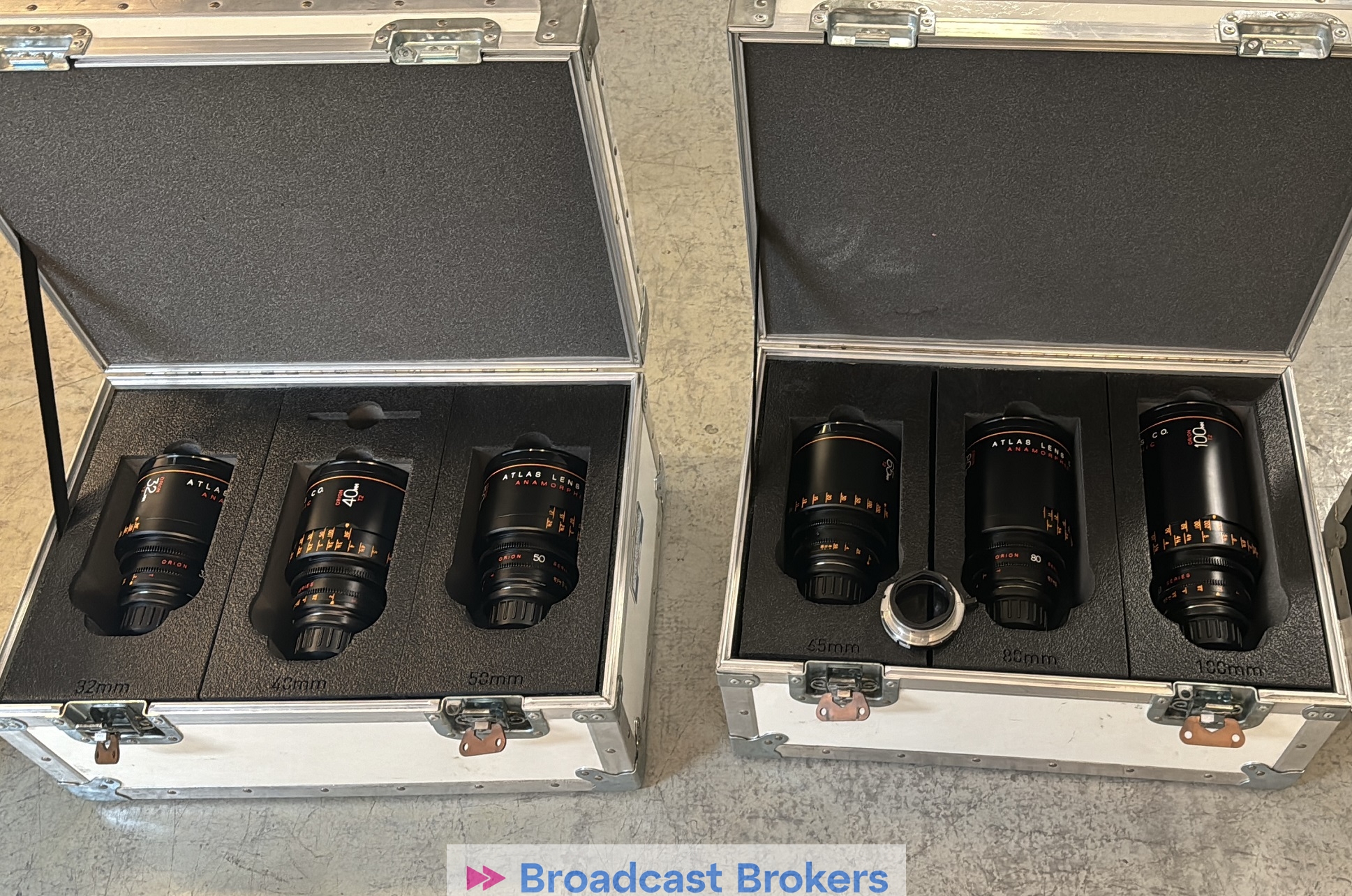
Image circle matters as much as squeeze. Many classic anamorphic sets were designed to cover Super 35. On a full-frame camera such as the ARRI Alexa Mini LF or the Sony Venice, a Super 35 anamorphic will vignette unless you switch to a smaller recording area or use an expander. That is why some sets, like the Atlas Orion set we list with a 1.4x LF expander, come with an accessory to cover a larger sensor.
On a 4:3 Super 35 camera such as the Alexa Mini 4:3, a 2x anamorphic is the natural pairing. Before buying, check that your camera offers an anamorphic desqueeze in the viewfinder and on the monitoring outputs, so the operator and the director see a correct image on set.
In a front anamorphic design, the cylindrical element sits at the front of the lens. This produces the strongest anamorphic character: oval bokeh, pronounced flares and the typical “breathing” look. Most high-end cinema sets are front anamorphic.
A rear anamorphic places the anamorphic element at the back of a spherical lens. It is lighter and cheaper but gives round bokeh, because the out-of-focus rendering is still shaped by the spherical front. If the oval bokeh is the reason you want anamorphic, make sure the set is front anamorphic.
Anamorphic sets differ greatly in personality:
The best way to choose is to test. Shoot the same scene with practical lights in the frame, a face in close-up and a deep background, then compare flares, bokeh and skin tones.

Broadcast Brokers lists used and new anamorphic sets from Cooke, ARRI, Atlas, Kowa, Lomo, Hawk, Great Joy and others. You can browse our current offers in the search by brand section, or contact us with your camera, sensor mode and budget and we will tell you which sets fit. Comparing spherical Cooke primes too? Read Cooke S4 vs S7.
Upgrading or changing your look? We also buy professional lenses: see sell your equipment. For lens servicing, visit our maintenance and repair page.
